In recent years, we have been hearing the term sustainability more and more often. However, to see what this word really means, we need to take a step back and talk about Sustainable Development.
Sustainable Development is defined as “development that meets the needs of the present without compromising the ability of future generations to meet their own needs”. As a concept, it was first defined in 1987 in the Brundtland Report (entitled “Our Common Future”) of the International Commission on Environment and Development.
A few years later (UN Conference on Environment and Development/1992 – Agenda 21) a similar definition was given: “development that provides long-term economic, social and environmental benefits while taking care of the needs of the present and future generations”.
The consolidation of the concept of sustainability in international law occurred with the Maastricht Treaty (1992), Treaty of Amsterdam (1997) and the World Summit on Sustainable Development in Johannesburg (2002).
Sustainable Development has an intergenerational nature and is based on three pillars: a. economic growth, b. social justice and c. environmental protection.
Thus, we can say that sustainability means meeting our own needs in a way that ensures the adequacy of natural, social and economic resources, so that future generations can also meet their own needs.
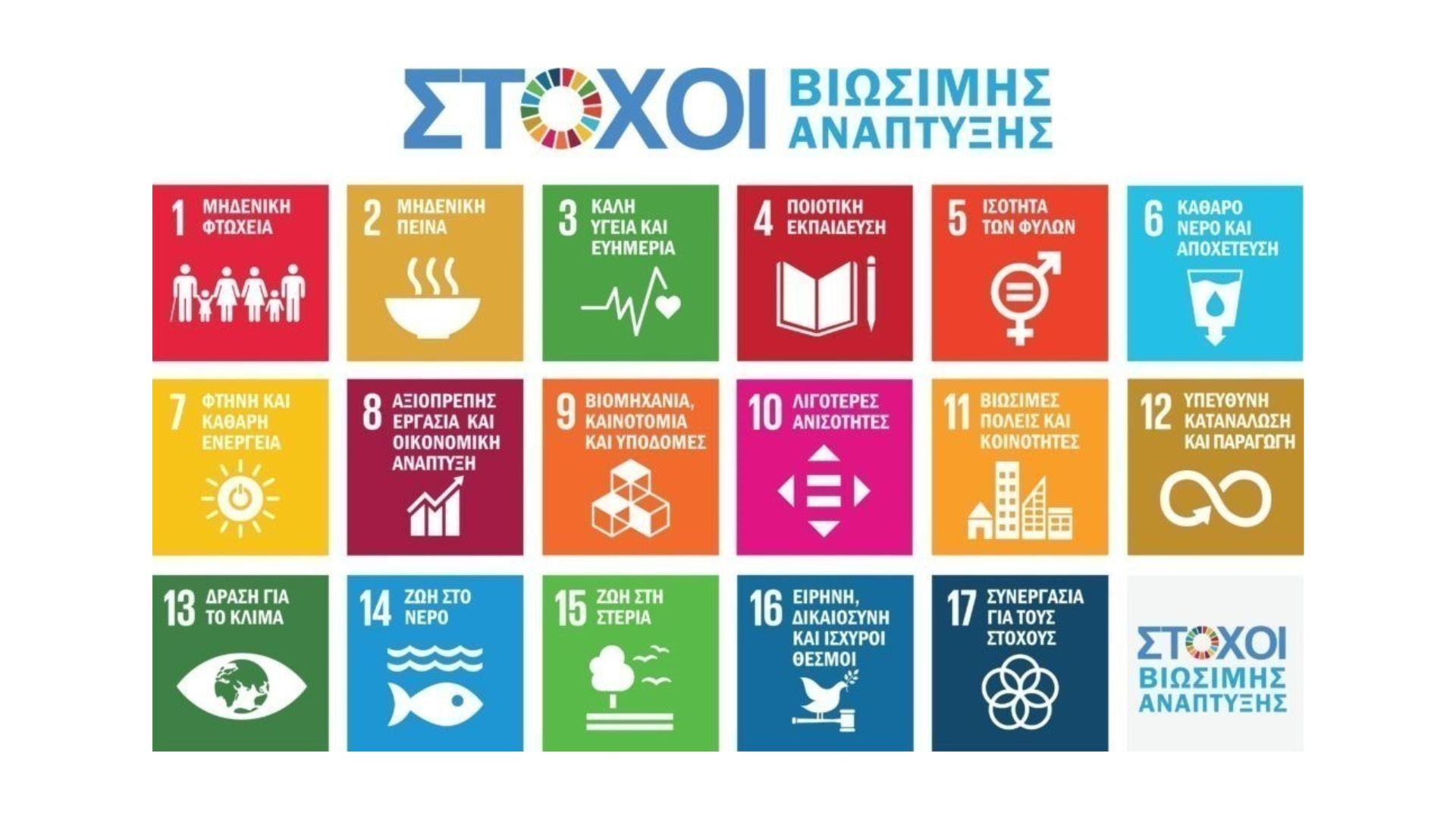
Based on the above, in September 2015, the most important effort to shift to Sustainable Development was made at the UN General Assembly. Member States formally adopted a set of 17 Sustainable Development Goals (SDGs) and 169 targets, with a target date of 2030.
The same year also saw the adoption of the Paris Agreement (COP21), the Addis Ababa Action Agenda and the Sendai Framework for Disaster Risk Reduction. The 17 Sustainable Development Goals are shown in the image below.